
Research Literature
GHK-Cu Research: Copper Binding and Extracellular-Matrix Studies
Oct
Research literature
This small copper-binding peptide has a long experimental history. The study model matters as much as the headline.
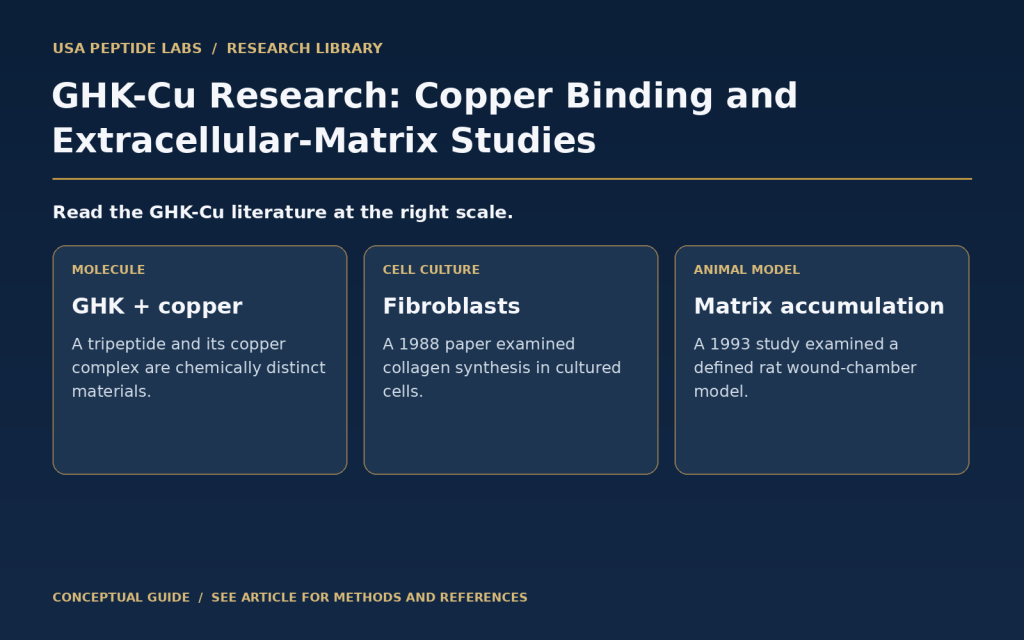
Read the GHK-Cu literature at the right scale.
A small peptide with a distinctive chemistry
GHK stands for glycyl-L-histidyl-L-lysine, a three-amino-acid peptide with affinity for copper ions. GHK-Cu refers to a copper complex of that peptide. The copper-binding feature is central to the compound’s identity and helps explain why it has attracted laboratory interest for decades.1
The name also carries an analytical lesson. GHK and GHK-Cu are not interchangeable labels. When comparing materials or reading a paper, check which form was actually used. Chemical specification belongs at the start of a research comparison.
What the fibroblast study measured
In 1988, Maquart and colleagues reported increased collagen synthesis in fibroblast cultures exposed to GHK-Cu under the study’s experimental conditions. The authors also reported that the observed change was independent of a change in cell number.1
That is a specific and useful finding: the researchers measured an outcome in cultured cells. It supports investigation of extracellular-matrix biology in a defined model. It does not establish how a retail research preparation performs as a cosmetic, an injection or a treatment.
The rat wound-chamber experiment
A 1993 paper from Maquart and colleagues examined GHK-Cu in a rat wound-chamber model. The investigators measured several aspects of tissue accumulation, including collagen and glycosaminoglycans. They reported increased extracellular-matrix accumulation in the studied model.2
The model is important to the interpretation. A defined experimental chamber, the chosen controls and the measured endpoints describe what the result means. The paper is evidence about that animal experiment, rather than proof of a benefit across unrelated applications.
Why extracellular-matrix research is broader than collagen
The extracellular matrix is the material surrounding cells. A useful reading of the 1993 experiment pays attention to multiple measurements rather than reducing the paper to a single collagen headline. Different endpoints can tell researchers whether an observed change reflects a broader pattern in the experimental system.2
For readers following the literature, that creates practical questions: which endpoint changed, how it was measured, whether a control peptide was used, and whether another model reproduced the observation. These questions keep the discussion grounded without removing what makes the work interesting.
Compound identity matters in this literature
A paper about a copper complex should be compared with material characterized for the intended compound. A generic purity percentage does not answer every question about chemical form, composition or a particular experimental requirement.
NIST’s peptide reference-material work compares mass-balance, amino acid analysis, elemental analysis and quantitative NMR approaches to assigning peptide purity by mass. That work illustrates why measured composition should be interpreted through the method used. A percentage needs a defined measurement basis.3
For a copper-containing preparation, additional characterization may be appropriate depending on the research question. The required evidence should come from the project’s analytical needs, rather than assumptions based on a product name or color.
What about peptide blends?
GHK-Cu may appear as one component of a research blend. A blend introduces additional questions about the identity, amount and analytical separation of each component. Evidence for one isolated ingredient does not establish the behavior of a finished mixture or prove synergy among its ingredients.
If comparing a multi-component material, ask what the report says about each named constituent. Our COA library and COA reading guide are starting points. Contact USA Peptide Labs for the available product and lot documentation before selecting material for a project.
Sources and further reading
