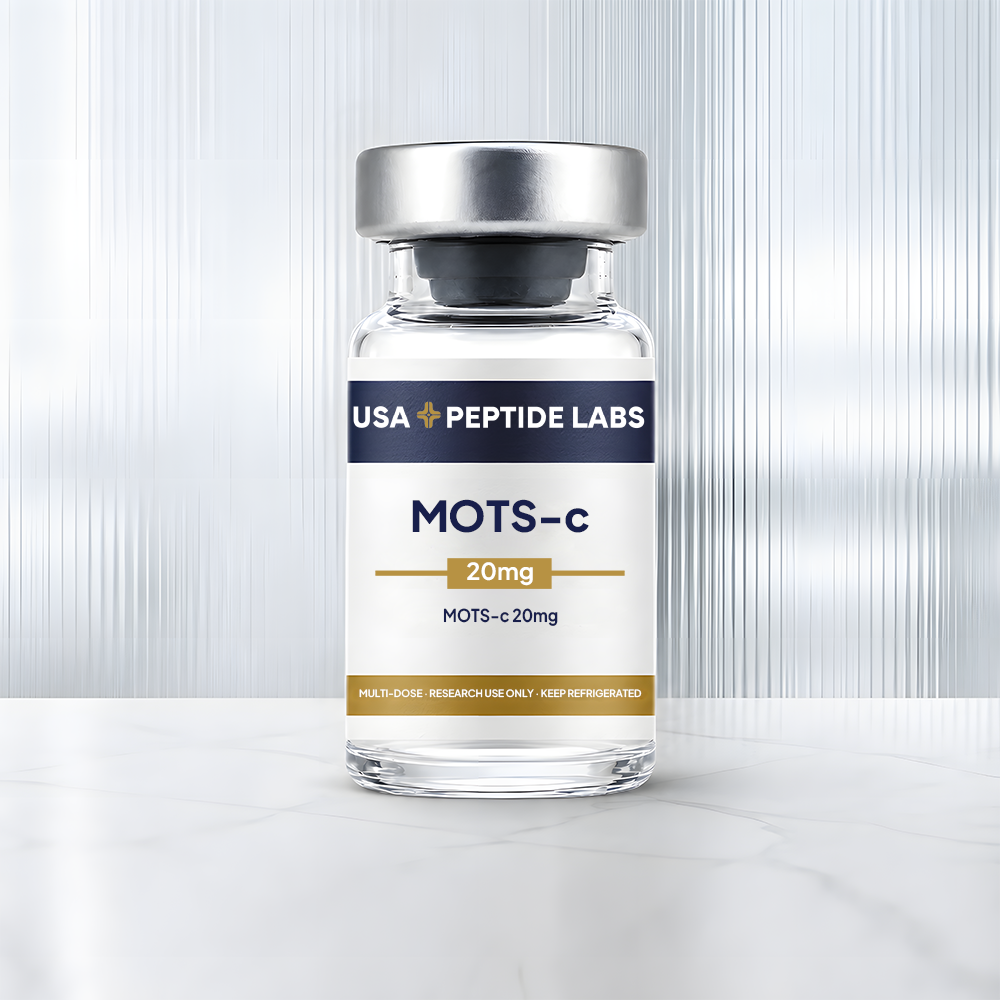
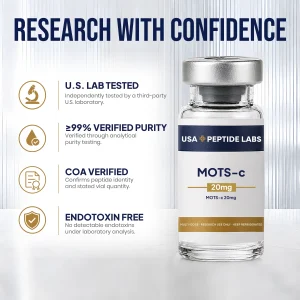
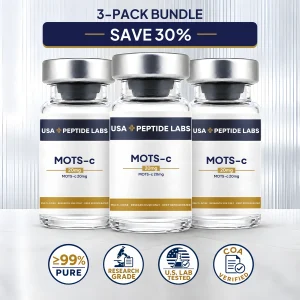

MOTS-C
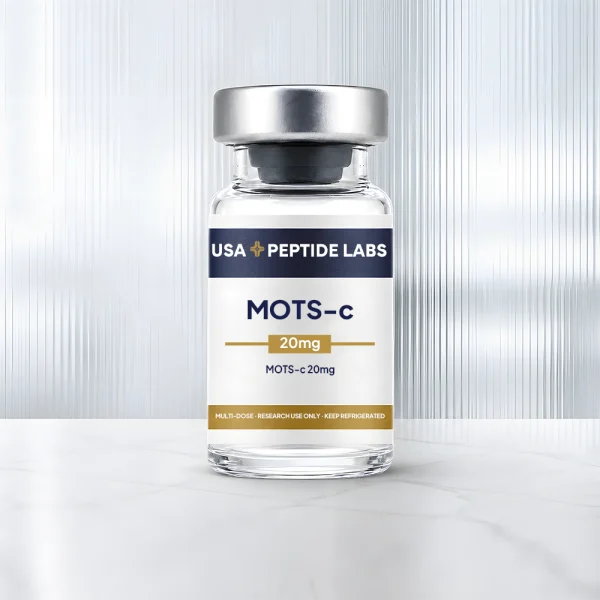
Mitochondrial Open Reading Frame of the 12S rRNA-c Peptide 20mg
Original price was: $145.00.$101.50Current price is: $101.50.
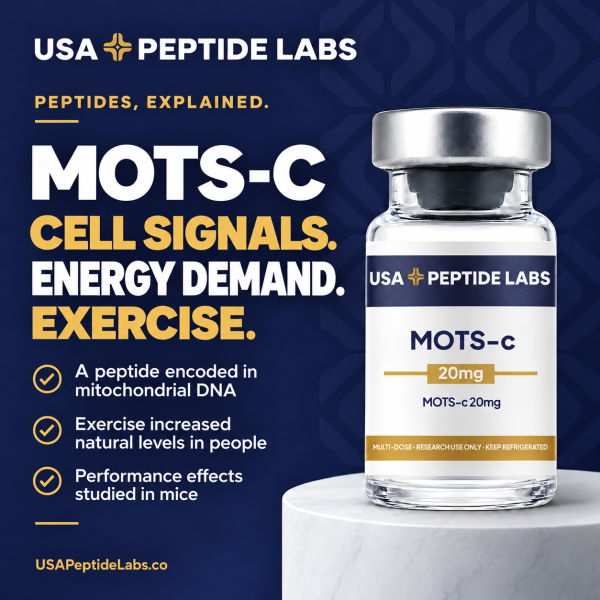
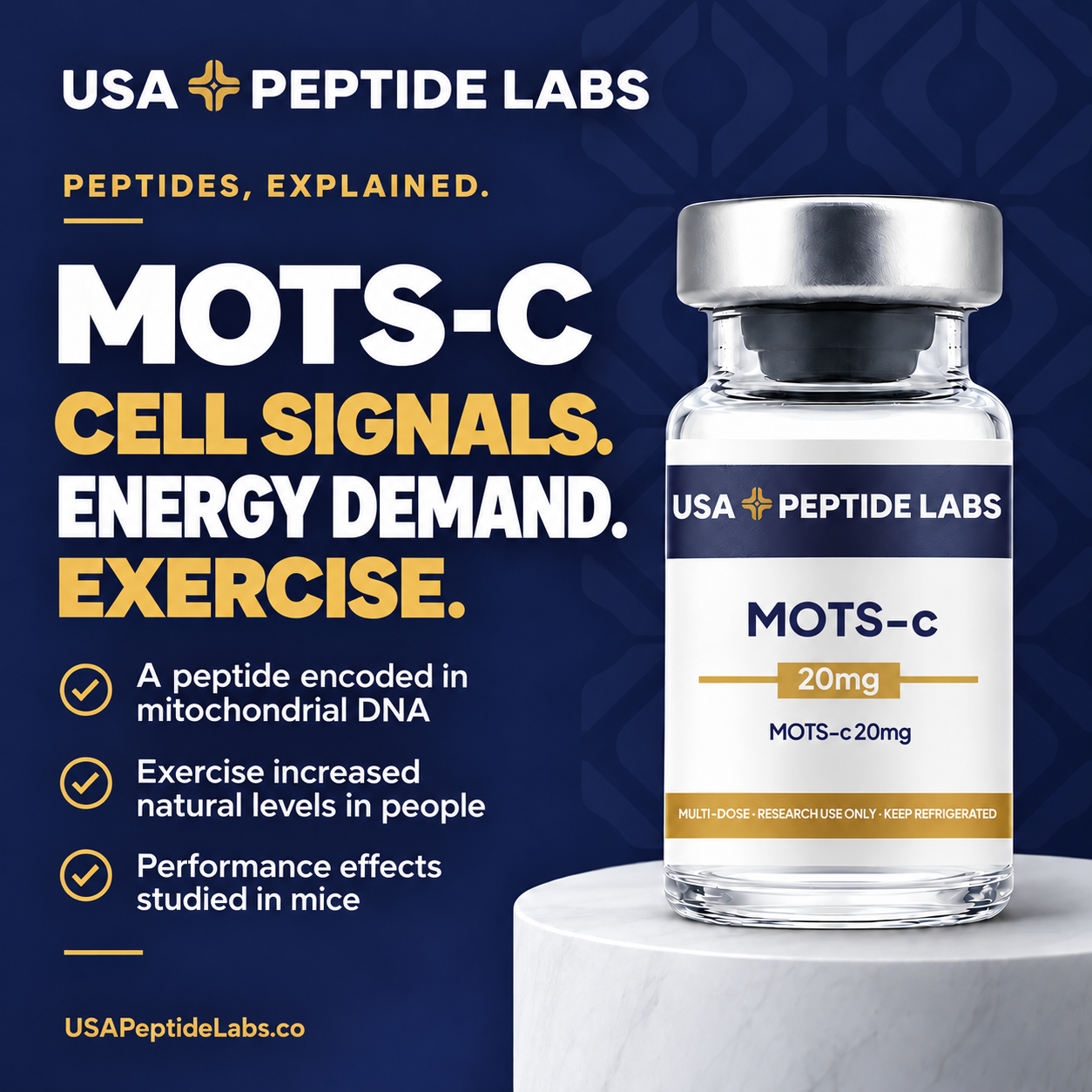
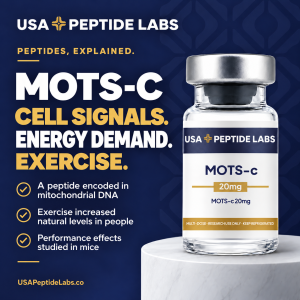
MOTS-C is a 16-amino-acid mitochondrial-derived peptide that connects mitochondrial biology with cellular metabolism. Studied in AMPK signaling and stress-response models, it brings cellular energy regulation and adaptation into the same research framework. This mitochondrial origin gives MOTS-C a distinctive profile for investigating how cells coordinate metabolic activity in response to changing conditions.
Available in 20 mg and 40 mg single-bottle sizes.
⚠️ Important Disclaimer
Research purposes only. Not for human consumption or therapeutic treatment.
MOTS-C comes from research into mitochondria, the structures best known for helping cells manage energy. Its interest extends beyond energy production: researchers also investigate mitochondria as a source of messages that affect how cells respond to metabolic stress.
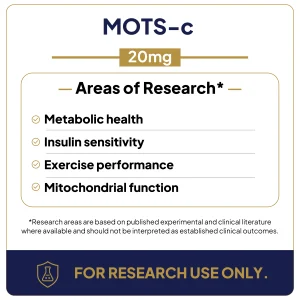
What researchers investigate
- Cellular energy sensing: Examine AMPK-related signals that help cells respond to changing energy conditions.
- Mitochondrial communication: Study how a mitochondrial-derived peptide relates to signaling elsewhere in the cell.
- Stress adaptation: Measure cellular responses to defined metabolic challenges.
What makes it different?
MOTS-C is a signaling peptide. NAD+ is a coenzyme and SS-31 is a different mitochondria-targeted peptide; they are not substitutes.
Research findings describe the materials and conditions studied; they do not predict results in people.
Product Specs
The amount below is the labeled quantity in a full vial, not a concentration or a dose.
| Material | Synthetic 16-amino-acid mitochondrial-derived peptide |
|---|---|
| Labeled amount | 20 mg or 40 mg per vial |
| Format | Lyophilized (freeze-dried) powder |
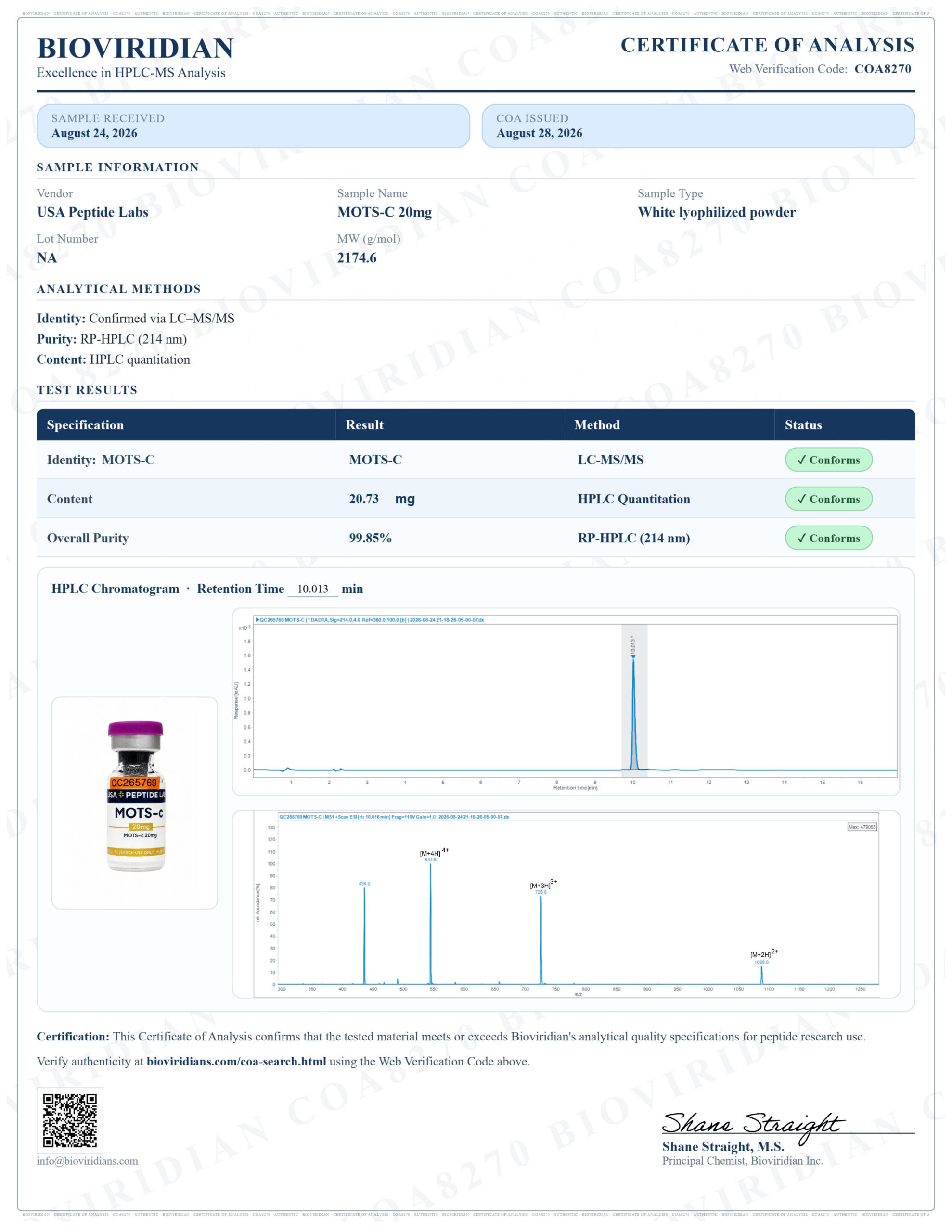
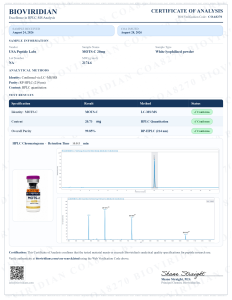
| Testing documentation | Published report COA8270; tested sample: MOTS-C 20 mg. See the Certificate of Analysis tab. |
Certificate of Analysis
Independent testing laboratory: Bioviridian Inc., College Station, Texas.
The report identifies the 20 mg sample. It does not establish that every available vial size was separately tested. The report lists the lot number as “NA”; contact us to confirm how it relates to your vial.
| Report / verification code | COA8270 |
|---|---|
| Tested sample | MOTS-C 20 mg |
| Issued | August 28, 2026 |
| Identity | Confirmed by LC-MS/MS, as reported. |
| Purity | 99.85% by RP-HPLC |
| Measured content | 20.73 mg |
Open full-size COA Verify with the lab
On the lab’s verification page, enter COA8270. The lab is an independent testing provider.
What the results mean
- Identity: checks whether the tested sample matches the reported compound.
- Purity: measures the chromatographic purity reported by the method; it is different from milligrams in a vial.
- Content: reports how much material was measured in the tested sample.
A certificate documents the tested sample and the tests shown. It does not establish clinical effectiveness or regulatory approval. Purity testing is not a sterility test.
Handling & Storage
Good handling protects the integrity of your research sample. Use the product label, any matching technical documentation and your laboratory’s approved procedure for this exact material.
- Check before opening: confirm the compound, vial size and relevant report.
- Keep dry material protected: minimize unnecessary exposure to moisture, light and temperature changes; follow the storage instructions supplied with your vial.
- Choose the solvent for the material: solubility and stability vary. Water, saline, PBS and acidic solutions are not automatically interchangeable.
- Label prepared samples: record the contents, concentration, preparation date and validated storage period. Use aliquots where appropriate to reduce repeated handling.
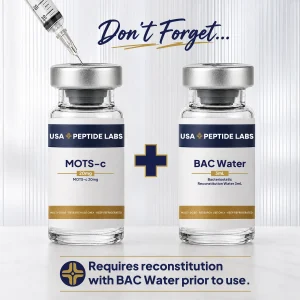
There is no universal reconstitution volume or shelf life for every peptide. A clear solution alone does not confirm identity, stability or sterility.
FAQ
What is the labeled amount?
20 mg or 40 mg per vial. For a blend, this is the total of the listed components. A concentration is calculated only after the final solution volume is known.
Where can I check the testing?
The Certificate of Analysis tab displays COA8270 from Bioviridian Inc. Open the full-size image and use the lab’s verification page to check the report. Confirm the sample size and how the report relates to your vial.
Is purity the same as the amount in the vial?
No. Purity is a measurement made by an analytical method; content is the measured amount of material. A high purity percentage does not, by itself, tell you how many milligrams are present.
How should I interpret the research?
Cell and animal studies do not establish improved exercise performance or other personal outcomes for this material.